42 where should a label be written on an agar plate
Blood Agar and Types of Hemolysis – Microbe Online Aug 20, 2022 · Blood agar consists of a base containing a protein source (e.g. tryptones), soybean protein digest, sodium chloride (NaCl), agar, and 5% sheep blood.. Blood contains inhibitors for certain bacteria such as Neisseria and Haemophilus genera so the blood agar must be heated to inactivate these inhibitors and to release essential growth factors (e.g., V factor). Lab 9 & 10 Flashcards - Quizlet Labels should be written on the bottom of the agar plate. How should agar plates be incubated? Why? should be up that way any condensation doesn't drop to the surface & mess up the growth of the bacteria a disinfectant is used on your work surface - before the beginning of laboratory procedures - after all work is complete
Nutrient Agar- Principle, Composition, Preparation, Results, Uses Once the media solidifies, the plates can be placed in the hot air oven at a lower heat setting for a few minutes to remove any moisture present on the plates before use. Storage of Nutrient agar. The media in the powder form should be stored between 10 to 30°C in a tightly closed container, and the prepared medium should be stored at 20-30°C.
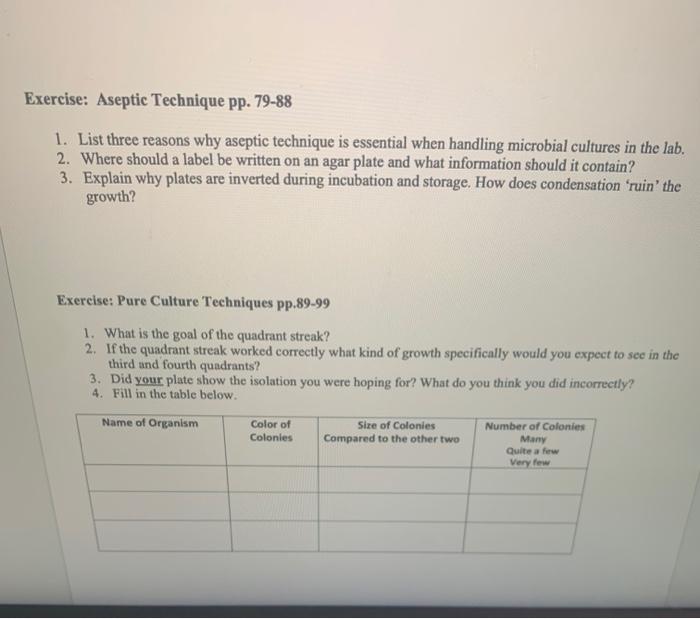
Where should a label be written on an agar plate
Aseptic Laboratory Techniques: Plating Methods - JoVE by ER Sanders · 2012 · Cited by 429 — Label around the edge of the bottom (not the lid) of an agar plate with at least your name, the date, the type of growth medium, ... Q 9 2 Pts Where should a label be written on an agar plate ... The label should be written on the bottom of the agar plate and not on the lid because when the agar plate is being stored/incubated, it is stored upside down in order to prevent the evaporation of water to drip onto the agar. This allows better visibility of the label without having to flip the agar plate over. Solved 1. Where should you label an agar plate before | Chegg.com Question: 1. Where should you label an agar plate before inoculating with bacteria? On the side of lid so it doesn't affect viewing On the lid over the top of quadrant four On the bottom containing the agar 2. In which quadrant will you expect to see isolated colonies? First O Second O Third or fourth 3.
Where should a label be written on an agar plate. Chocolate Agar: Composition, Preparation, Uses - Microbe Online May 29, 2022 · Chocolate agar slants. Dispense 4 mL of the medium into 16X125 mm screw-cap tubes; Keep the tubes in a slanted position and let them solidify. Chocolate agar slants appear brown to brownish-red color. They should be stored at 4°C when not in use and warmed to room temperature (25°C) before use. Pour Plate Method- Definition, Principle, Procedure, Uses - Microbe Notes Principle of Pour Plate Method. The pour Plate Method is based on the fact that when an agar medium mixed with microorganisms is incubated, each of the viable microorganisms will multiply forming a separate colony. In this method, a certain volume, usually 1 mL, of the serially diluted liquid sample is mixed properly with approximately 15 mL of ... MacConkey Agar - Plate, Purpose, Ingredients and Principle The first step is to suspend 49.53 grams of a dehydrated medium in a liter of distilled water. Bring to boil to completely dissolve the medium. Autoclave 15 lbs pressure or at least 121 degrees Celsius for about 15 minutes. Let it cool. Pour into the sterile Petri plate and carefully observe what will happen. (4, 7, 8, and 9) MacConkey agar Results PDF A Level Biology Drawing Skills Booklet - Oxford, Cambridge and RSA ... • Labels should be written horizontally, as in a textbook, not written at the same angle as the label line. • As previously mentioned, a title, stating what the ... an agar plate or an unfamiliar slide. Assessment questions will always be phrased so that it is clear exactly what is required
Proper method to label a petri plate prior to pour plating ... Proper method to label a petri plate prior to pour plating/inoculation, with initials, date, ... Aseptic Laboratory Techniques: Plating Methods - PMC Label around the edge of the bottom (not the lid) of an agar plate with at least your name, the date, the type of growth medium, and the type of organism to be plated on the medium. The plates must be completely dry without condensation on the lid and pre-warmed to room temperature prior to streak-plating. Nutrient Agar: Composition, Preparation and Uses - Microbiology Info.com Preparation of Nutrient Agar 1. Suspend 28 g of nutrient agar powder in 1 litre of distilled water. 2. Heat this mixture while stirring to fully dissolve all components. 3. Autoclave the dissolved mixture at 121 degrees Celsius for 15 minutes. 4. Once the nutrient agar has been autoclaved, allow it to cool but not solidify. 5. Lab Quiz: Streak Plate Technique Flashcards | Quizlet c) On the bottom of the plate. All labeling should be done on the bottom portion of the agar plate. This ensures that the written information stays with your culture, even if the lid gets accidentally exchanged with another plate.
Aseptic techniques and preparing bacterial plates - BBC Bitesize Preparing the agar plates for growth of a colony of bacteria. ... Allow the plate to dry then label the half of the petri dish containing the media (do not label the top). Invert the plate and ... Making Agar Plates - University of Utah Label the plates with the type of media you will pour into them. Swirl the hot media vigorously to mix. Cool the media until it is just cool enough to handle, about 20-30 minutes. You should be able to hold your hand agains the container reasonably comfortably for a few seconds. If the media is too cool, it will start to solidify in the container. Aseptic Technique and the Transfer of Microorganisms While inoculating agar media (plates and agar slants), make sure not to gouge or tear the surface of the agar with the loop. Always label all tubes and plates with: 1. The name of the organism 2. The type of media 3. Your initials 4. The date; Make sure to place agar plates in the incubator upside down. This prevents water condensation from ... Environmental Cleaning Guidelines for Healthcare Settings with fresh disinfectant. Always use a clean, dry, appropriately-sized bottle, label the product and date it. The product should be discarded when past the expiry date for stability. 26. All housekeepers must undergo a documented orientation session. 27. All housekeepers are recommended to have written training records that are
Solved Exercise: Aseptic Technique pp. 79-88 1. List three ...
Environmental Monitoring Guide - Non Sterile Facility ... Jan 16, 2021 · TAMC Plate Count Agar, incubated at 30- 35°C for 48-72 hours, or R2A agar, incubated at 20-25°C for 5 days (no fewer than 96 hours). JP: R2A Agar at 20-25°C or 30-35°C for 4-7 days (or longer). Plate Count Agar, incubated at 30-35°C for 48-72 hours, or R2A agar, incubated at 20- 25°C or 30-35°C for 5 days (no fewer than 96 hours).
Proper method to label a petri plate prior to pour plating ...
Streak Plate Method - Amrita Vishwa Vidyapeetham Write close to the edge of the bottom of the plate to preserve area to observe the plate after it has incubated. Labels usually include the organism name, type of agar, date, and the plater's name or initials. Using sterile cotton swabs, remove any visible water on the agar in the plate or around the inner rim of the petri plate.

Proper method to label a petri plate prior to pour plating ...
Methods how to properly label an agar plate always - Course Hero See Page 1. Methods: -How to properly label an agar plate: Always label a plate with your name, Date, incubation temperature, bacteria type, test type, class, and agar type. - Aseptic technique was used throughout identifying the unknown bacteria. Flaming and cooling the loop in done between uses to decontaminate the inoculation loop.

Aseptic Laboratory Techniques: Plating Methods | Protocol
Preparation and Storage of Culture Media - CABRI 1 Write on the label the date of receipt in the laboratory. 2 Store as indicated on the label; usually below 25°C in a dry area, away from direct sunlight, autoclaves, drying ovens or other heat sources. 3 Check expiry date on the label, some media have significantly shorter shelf-lives than others. 4 Use stock in lot/batch number order.

Micro lab Flashcards | Quizlet
Pour Plate Method: Procedure, Uses, (Dis) Advantages Lift the lid of the Petri dish slightly with the left hand and pour the sterile molten agar into the Petri dish and replace the lid. Flame the neck of the bottle and replace the cap. Gently swirl the plate on the benchtop to thoroughly mix the culture and medium.
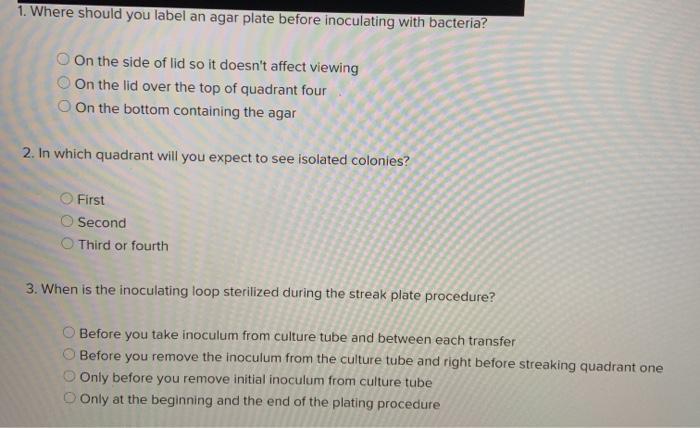
Solved 1. Where should you label an agar plate before | Chegg.com
Correct labelling of agar plates in microbiology - YouTube Welcome to our suite of NUI Galway Microbiology teaching videos. We hope that they will guide you in performing your experiments in a scientific and safe man...

950 questions with answers in AGAR | Science topic
Maintenance of C. elegans - WormBook Upon receipt of a strain request, the CGC will send a response confirming that the order has been received. The requested strains are either thawed from a freezer vial or recovered from a starved plate kept in an incubator at 11 ° C. Animals of each strain are placed on freshly prepared Nematode Growth Medium (NGM) petri plates that have been spread with E. coli as a source of food and ...
Basic Practical Microbiology
Lab 9- Aseptic Technique Flashcards | Quizlet Where should a label be written on an agar plate? On the agar side (bottom) so the bacterial growth is labeled in case lids get mixed up and also along the edge so you can observe the bacterial growth How should agar plates be incubated and why?
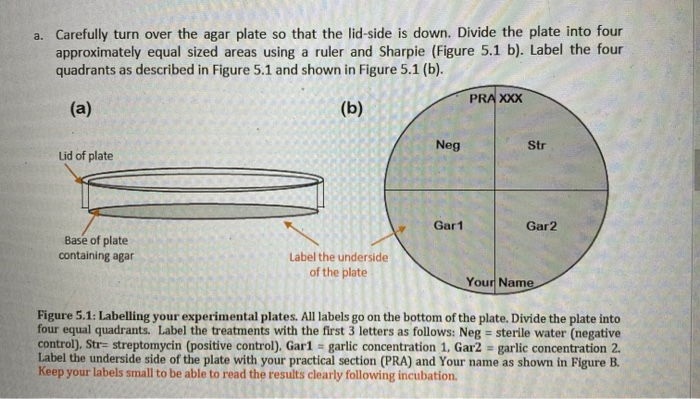
Solved I have these 4 question:. This lab was about how the ...
PDF Streaking Microbial Cultures on Agar Plates - University of Missouri ... (area 3), extend the streaks into the center fourth of the plate (area 4). Quadrant Streak Tips • Use the entire surface of the plate, not just the middle of the plate. • Streak only one loopful of a broth culture. • Remove only one colony or a barely visible amount of cells from a plate or slant. 3 2 4 1 Inoculation of a streak plate 1.
Exploring Germs and Bacteria at Home (DIY Agar Petri Dishes ...
Why should you label agar plates on the base and not the lid ... - Answers Where should a label be written on an agar plate? On the base of the agar plate. What is the material used as a base for bacterial culture media? The substance is Agar or Agar-Agar Why use Azide...

Q 9 2 Pts Where should a label be written on an agar plate ...
Bacteriological Culture Methods - Microbiology: A Laboratory Experience Flame the loop and cool it in the agar. Overlap the step 1 streak 3-4 times to pull out a reduced number of bacteria, and spread them out down the side of the plate. Consider this step 2. Flame the loop and cool it in the agar. Overlap the step 2 streak 3-4 times and spread over the surface.
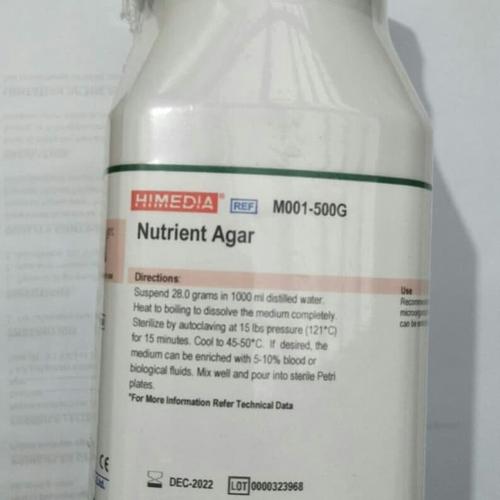
Jual Nutrient Agar Himedia, 100 gram - Kab. Temanggung ...
Petri Dish with Agar - Preparation, Requirements and Procedure Place a sterile lab thermometer in the mixture and monitor until its temperature falls to about 47 degrees (45- 50 degrees) Pour melted agar in to the Petri dish to cover the bottom (about a quarter) and replace the lid immediately Allow the agar plate to cool and set (the medium will set like gelatin at room temperature)
STANDARD OPERATING PROCEDURE:
PDF Lab 9 Serial Dilution, Pour Plates, and Enumeration of Bacteria Gently swirl the Nutrient Agar and diluted bacteria samples together, and let the Petri plate solidify. This is called the pour plate technique. Incubate for 24 to 48 hours at 37°C. Part II: Enumerating Bacterial Densities (the following week) After incubation, count the number of bacterial colonies growing in Petri plates labeled #2, #3, and ...
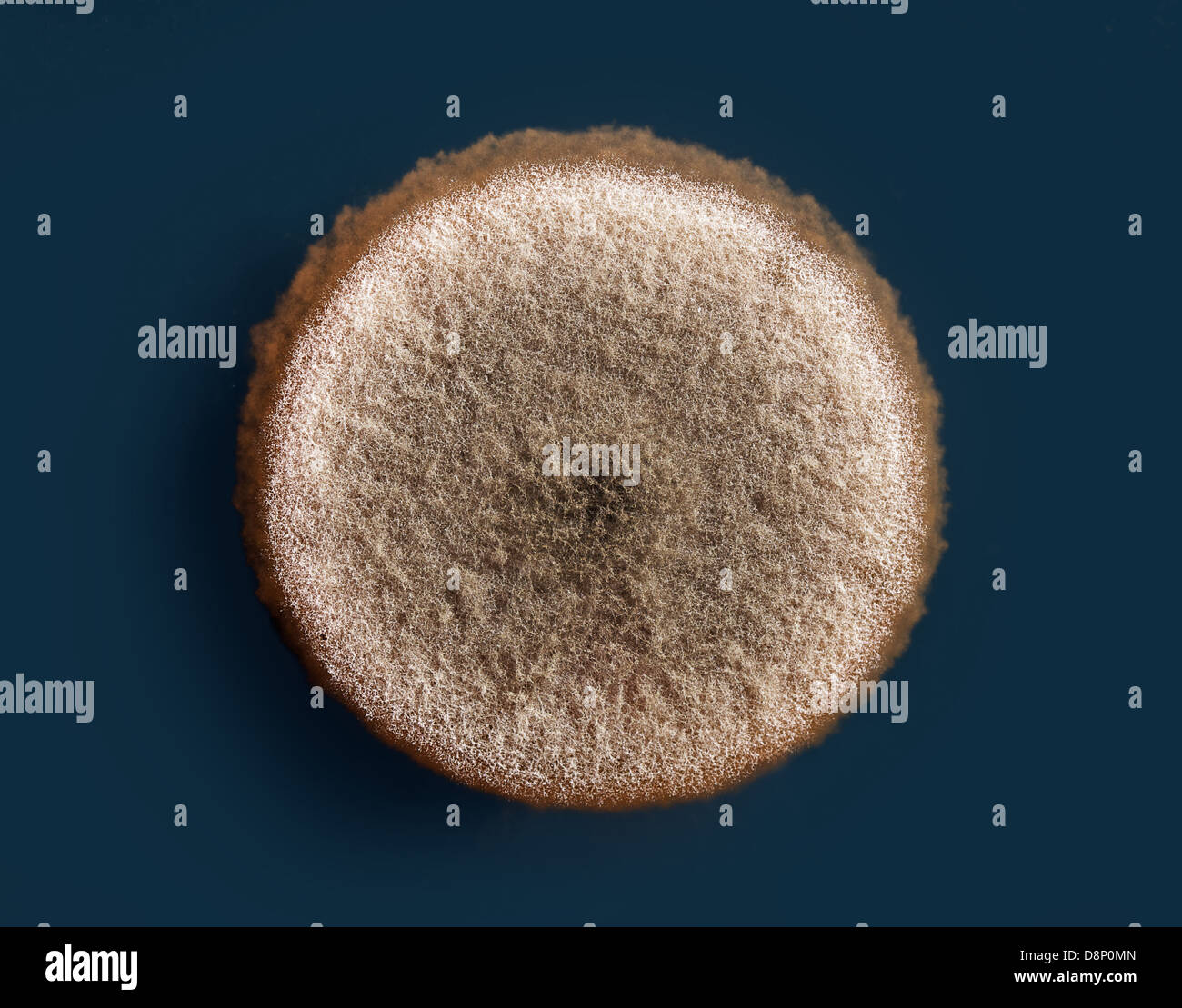
a mold colony on an agar plate (aspergillus niger Stock Photo ...
How to Grow Bacteria: 5 Experiments to Grow & Test Bacteria Slide open the cover of the petri dish just enough to pour agar into the dish. Pour enough agar to cover 1/2 to 2/3 of the bottom of the dish (about 10-13ml). Don’t let the bottle mouth touch the dish. Cover the dish immediately to prevent contamination and tilt it back and forth gently until the agar coats the entire bottom of the dish.

Culturing and Enumerating Bacteria from Soil Samples ...
Streak Plate Method: Principle, Procedure, Uses - Microbe Online An agar plate is taken and appropriately labeled. Using a sterile (flamed) loop, a loopful sample is carefully spread on the edge of the agar. (Care should be given not to gauge the agar) The loop is famed, and after cooling, 7-8 straight lines are streaked from area 1 to the opposite side of the plate.

Addgene: Pouring LB Agar Plates
7 Streak Plate Method Best Practices - Microbiologics Blog Follow these best practices to get your streaking technique down to a science. 1. Label first, streak second. Clearly labeling your plates to identify the microorganism only takes a few seconds and will help you avoid a big headache later. 2. Keep the agar dry. Make sure the agar plates are free of droplets of condensed moisture.

Malt Extract Agar Plates - Great for Mushrooms, Molds, Fungus - 10 Prepoured MEA Petri Dishes (10)
Solved Why is it important to label the bottom of the agar - Chegg Why is it important to label the bottom of the agar plate (the side with the agar) and NOT the lid of the plate? If you label the lid of the plate and the lid and the bottom (agar portion) are separated you no longer know what sample is on your plate. Labeling the lid can lead to contamination of the sample.

Aseptic Laboratory Techniques: Plating Methods | Protocol
Microbiology Writing Guide: Lab Report Format In a list of objects including both numbers over and under ten, all numbers may be expressed as numerals. Example: 17 bacteria, 2 yeast, and 1 protozoan. If a number starts a sentence spell out the number, do not use a numeral. Example: ten mannitol salt agar plates were streaked… Calculations. The equation should be indicated.
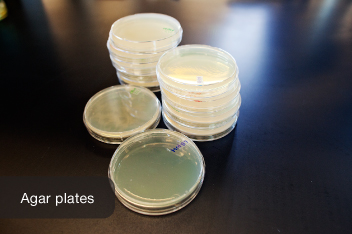
Making Agar Plates
Where should a label be written on an agar plate? - Answers Best Answer. Copy. On the base of the agar plate. Wiki User. ∙ 2013-01-22 05:02:39. This answer is:
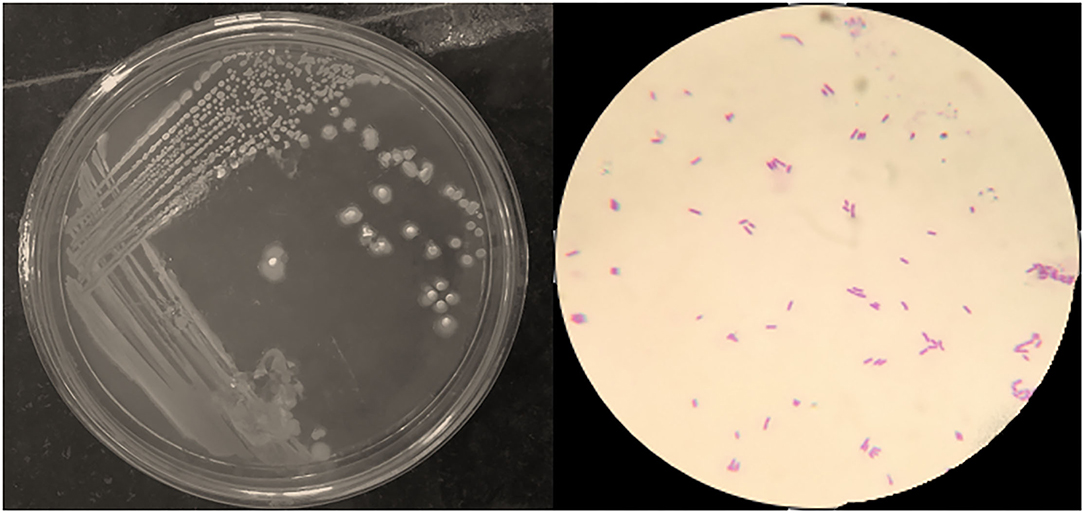
Frontiers | Plant Growth-Promoting Activity of Bacillus sp ...
Solved 1. Where should you label an agar plate before | Chegg.com Question: 1. Where should you label an agar plate before inoculating with bacteria? On the side of lid so it doesn't affect viewing On the lid over the top of quadrant four On the bottom containing the agar 2. In which quadrant will you expect to see isolated colonies? First O Second O Third or fourth 3.
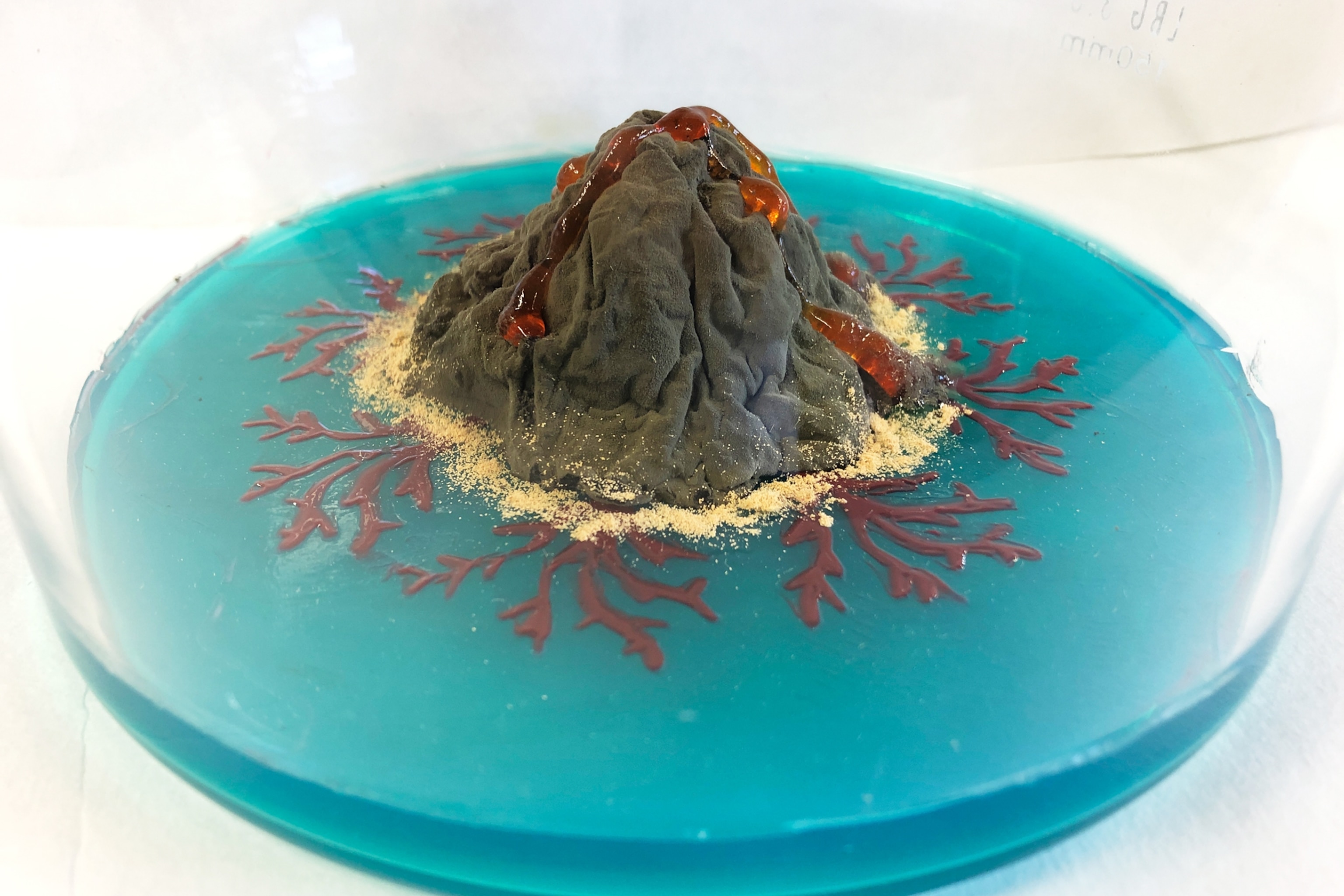
Agar Art Contest 2019: See this year's winners
Q 9 2 Pts Where should a label be written on an agar plate ... The label should be written on the bottom of the agar plate and not on the lid because when the agar plate is being stored/incubated, it is stored upside down in order to prevent the evaporation of water to drip onto the agar. This allows better visibility of the label without having to flip the agar plate over.

Correct labelling of agar plates in microbiology
Aseptic Laboratory Techniques: Plating Methods - JoVE by ER Sanders · 2012 · Cited by 429 — Label around the edge of the bottom (not the lid) of an agar plate with at least your name, the date, the type of growth medium, ...
Exploring Germs and Bacteria at Home (DIY Agar Petri Dishes ...

Aseptic Laboratory Techniques: Plating Methods | Protocol
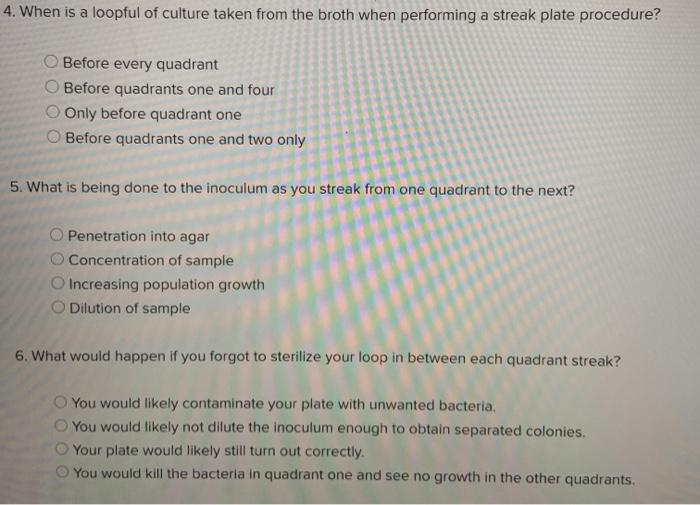
Solved 1. Where should you label an agar plate before | Chegg.com

Proper method to label a petri plate prior to pour plating ...
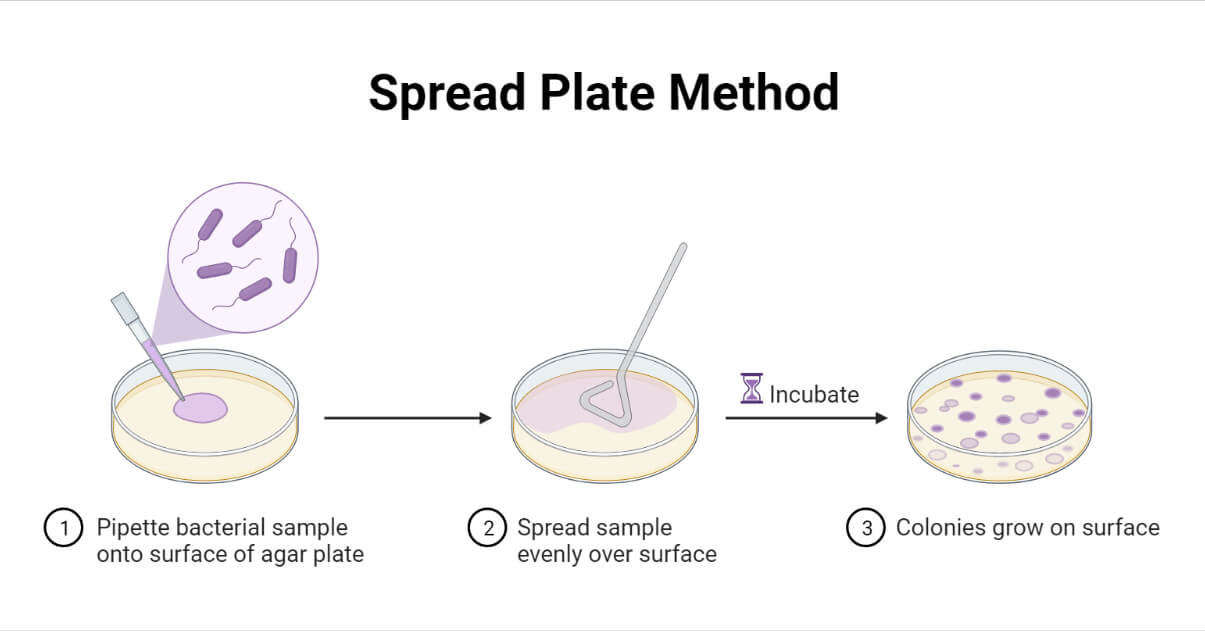
Spread Plate Method- Definition, Principle, Procedure, Uses
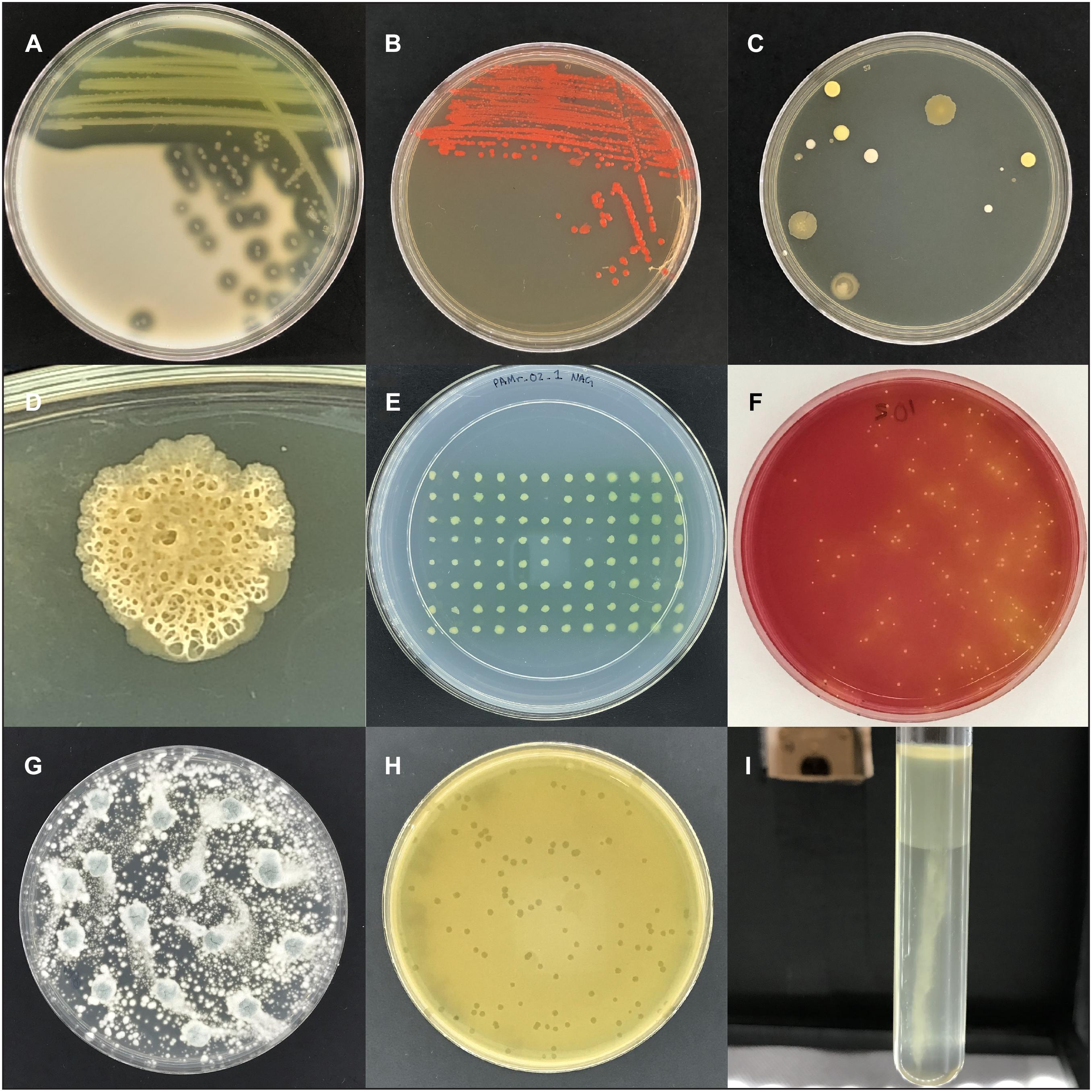
Frontiers | Inexpensive Apparatus for High-Quality Imaging of ...
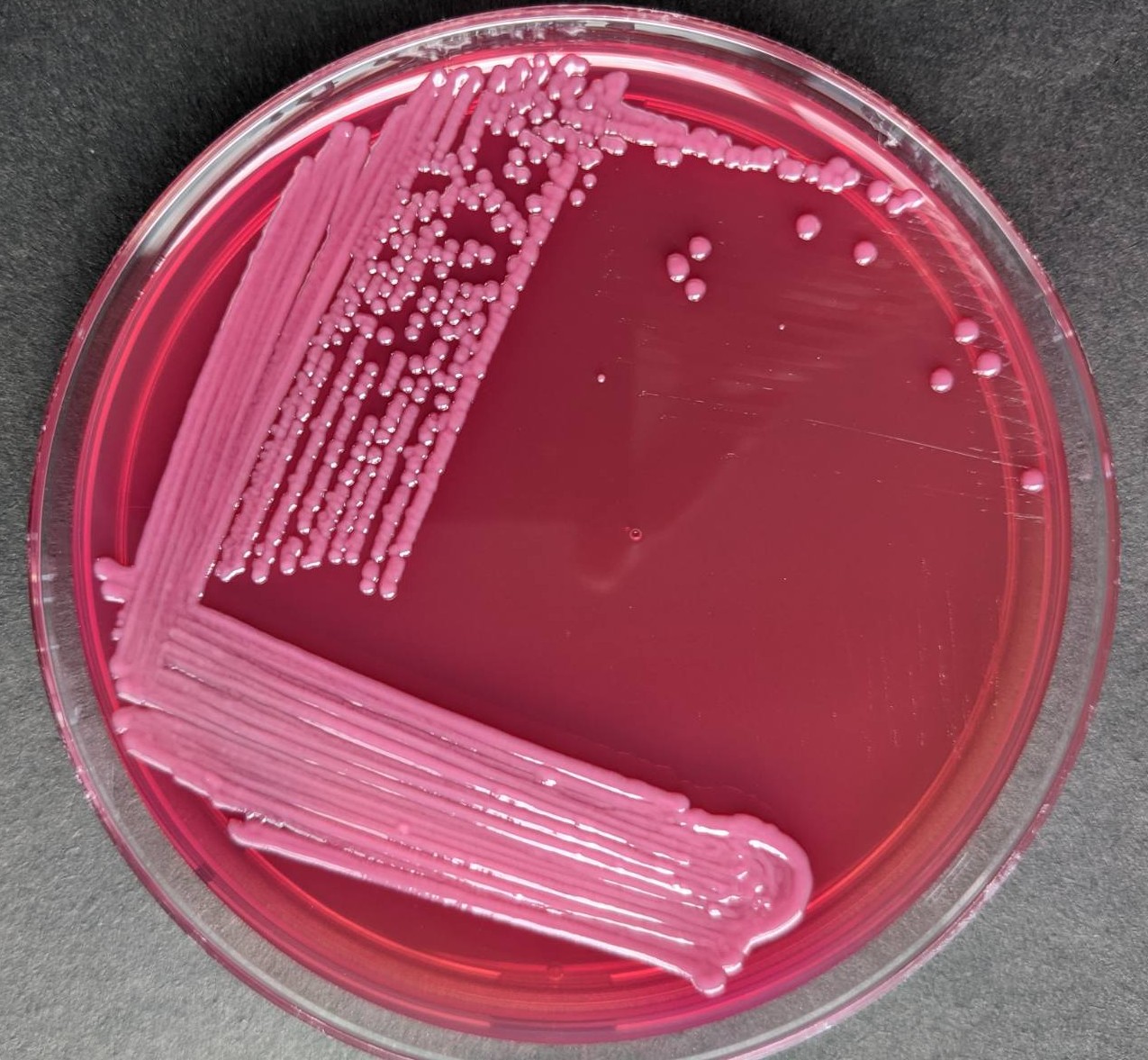
MacConkey Agar: Composition, Uses, Colony Characteristics ...
Solved] Please see an attachment for details | Course Hero

WL Nutrient Agar for microbiology Wallerstein Laboratory ...

Lab 5/5a Transformation of E. coli with a Recombinant Plasmid ...

Proper method to label a petri plate prior to pour plating ...
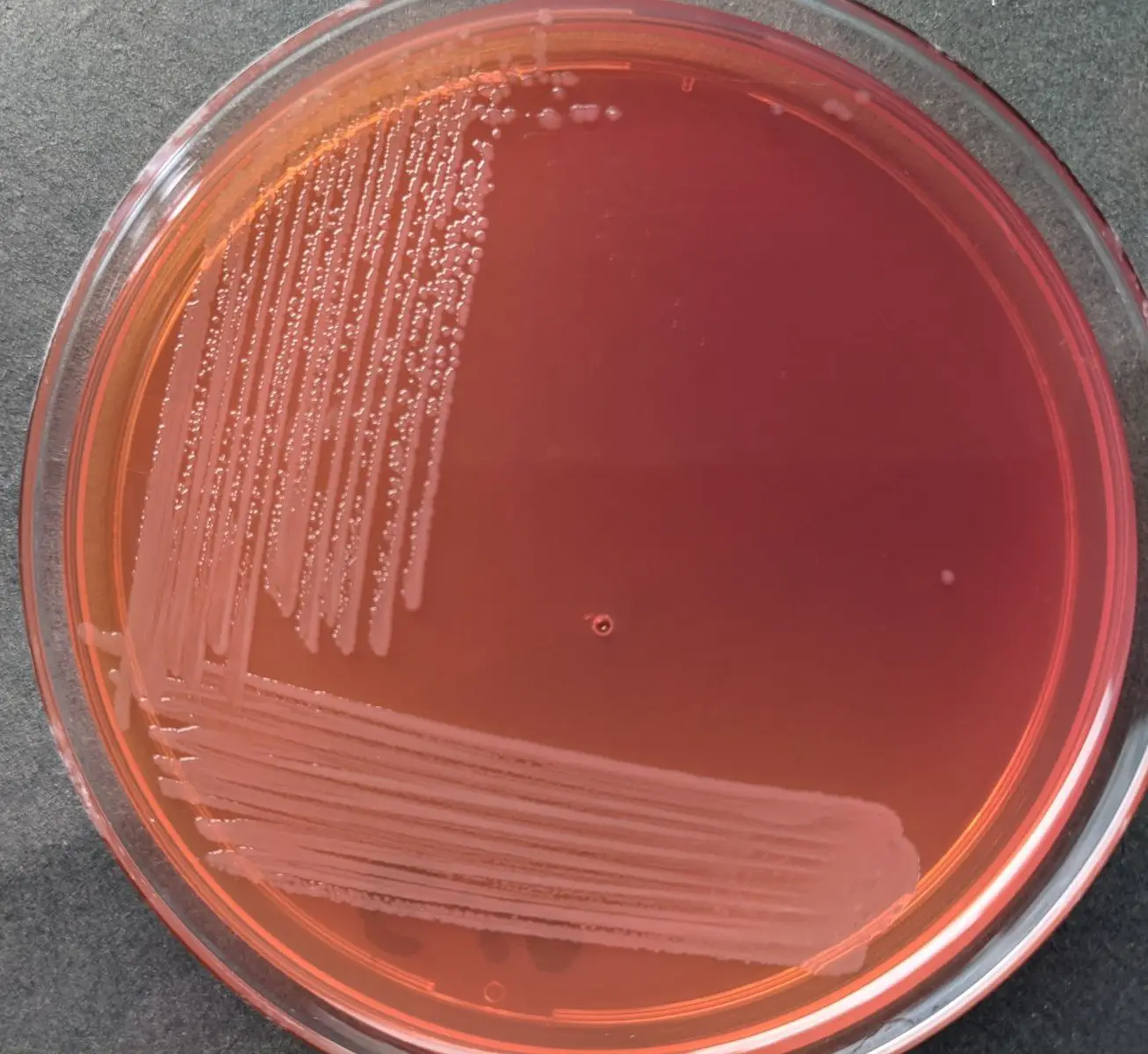
MacConkey Agar: Composition, Uses, Colony Characteristics ...

Proper method to label a petri plate prior to pour plating ...

Aseptic Laboratory Techniques: Plating Methods | Protocol

Use a black permanent marker to divide your agar plate into 4 ...

Eukaryotic catecholamine hormones influence the chemotactic ...

10 Alasan Kuat Mengapa Harus Khawatir Terhadap Resistensi ...

Petri Dishes with Agar: How to Make Agar Plates
Solved] Explain the correct way to label an Agar petri dish ...

Agar Plate - an overview | ScienceDirect Topics
Post a Comment for "42 where should a label be written on an agar plate"